

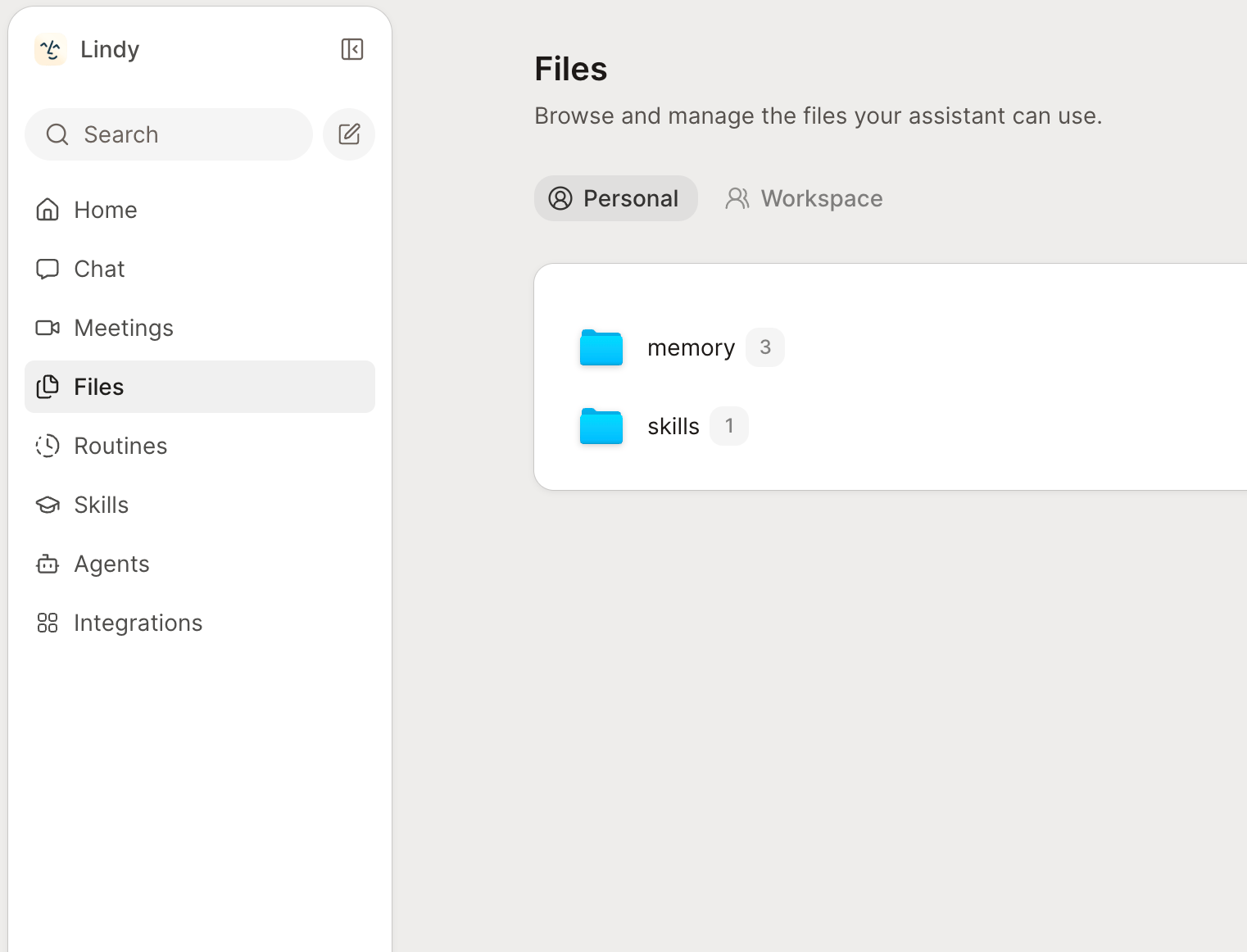
Personal, team, and system files
A switcher at the top of the explorer flips between your scopes:
Personal files are private and scoped per workspace, so nothing leaks between the workspaces you belong to. Team files are shared knowledge for the whole workspace; regular members get a read-only view with a lock banner, and owners and admins can edit. System files ship with Lindy and can’t be changed.
Adding files
1
Create in the explorer
Use New file or New folder to make something from scratch, then rename, move, or organize it however you like.
2
Drag and drop to upload
Drop files, or entire folders, onto the explorer. Folders are walked recursively, so subfolder structure is preserved. You can drop up to 100 files at once.
Two things to know: empty folders can’t be saved (Lindy tracks files, not empty directories), and on a name conflict Lindy either overwrites or keeps both by adding a numbered copy.
Teach Lindy with files
Files aren’t just storage. They can extend what Lindy can do.- Skills live in a
.skills/folder. Each skill is a folder with aSKILL.md(a name, description, and instructions), and the folder name is the skill name. Lindy sees the names and descriptions of enabled skills, and pulls in a skill’s full instructions on demand when it’s relevant. Skills layer across scopes: your Personal version overrides the Team’s, which overrides the built-in System one. Browse and install ready-made skills from the Skills page and marketplace; installing one copies it into your Personal or Team files. - Memory lives in a
.memory/area, where Lindy keeps durable knowledge it can rely on across tasks.
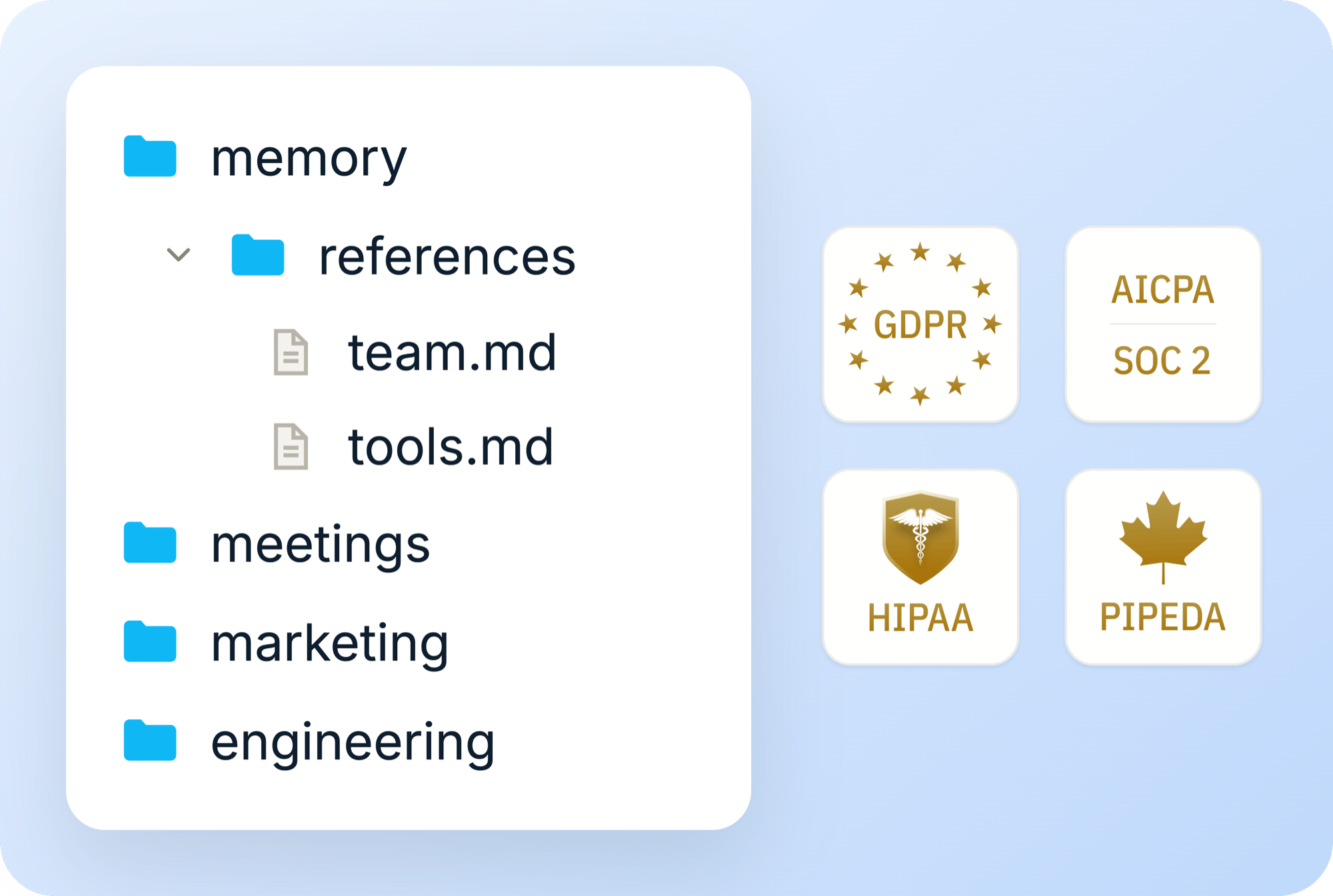
Editing and saving
Files open in a viewer with Preview, Raw, and History tabs. Editable text files open in an inline code editor.Saving is explicit: changes only apply when you click Save, and Lindy warns you before discarding unsaved edits. Read-only files (Team files for non-admins, and system files) show a lock banner instead.
Versions and syncing
- Every save is a version. Full history is kept, and you can restore an earlier revision any time. Even deleting a file keeps its earlier versions.
- Changes sync live. When Lindy writes a file mid-task, the explorer updates in near-real-time. Edits to
.skills/refresh what Lindy knows on its next turn.
Relevant Docs
Skills
Turn files into capabilities Lindy picks up on its own
Routines
Have Lindy produce files on a schedule